
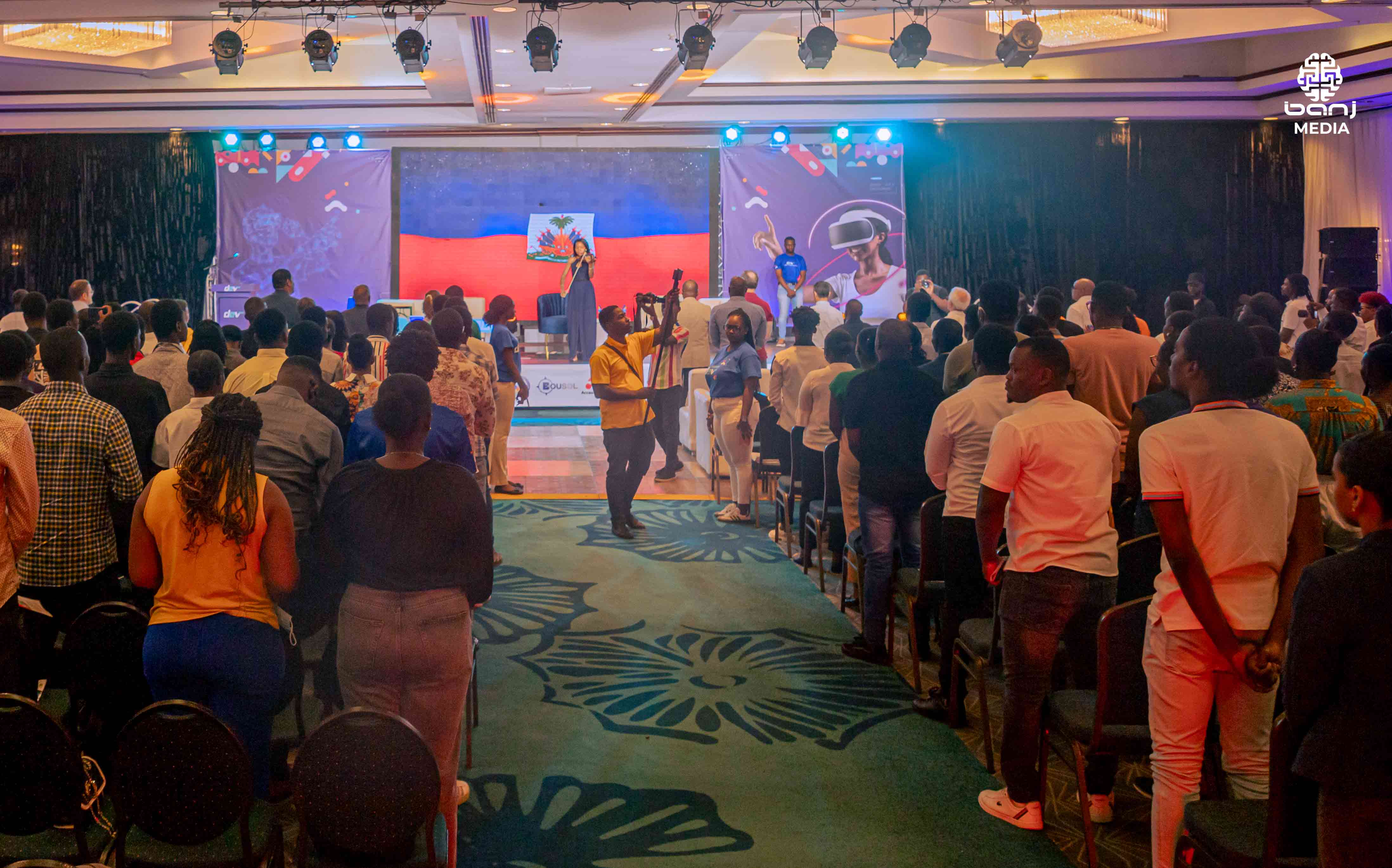
Haiti does not lack talent. It lacks access. Capital is limited. Visibility is uneven. Institutions are unclear. Credibility depends on relationships, not structure. When access depends on who you know, innovation becomes random.
DevExpo was never meant to be another tech gathering. It is a deliberate attempt to reorganize how talent, capital, and institutions interact in Haiti.
In many emerging economies, we focus too much on funding and not enough on coordination. Developers are learning online. Freelancers are working for clients abroad. Startups are experimenting. Institutions want to engage. But they are not aligned. They are not connected in a structured way.
When actors do not interact regularly, innovation stays isolated. And when innovation stays isolated, capital becomes cautious. That slows everything down.
DevExpo exists to create structured interaction. It brings developers, startups, institutions, media, and investors into the same space, physically and digitally. That is not event planning. That is ecosystem building.
The numbers already show that something structural is happening. In previous editions, DevExpo generated more than 500,000 digital views and brought together over 1,500 in-person participants. Five hundred developers engaged directly. Eighty-four startups applied, thirty exhibited, six pitched to investors, and four raised capital.
These are not event statistics. They are a pathway: Visibility — Exposure — Selection — Capital. That is how ecosystems begin to function.
Innovation slows down when friction is high. Friction looks like this: a developer in Cap-Haïtien with no national visibility. A startup in Les Cayes unable to reach investors. A foundation looking for credible projects but unsure where to find them. Communities in different departments working alone.
DevExpo 2026 expands across all ten departments and includes the diaspora. This is not symbolic. It is strategic. When opportunity is not limited to one city, participation increases. And participation is the foundation of innovation.
Artificial Intelligence is not the final goal. It is the strategic opportunity of this moment. The global economy is being reshaped by AI. Countries that build AI capability improve productivity without increasing size. Countries that do not will depend on tools built elsewhere.
Through the Challenge DevExpo 2026 – IA pour l'Impact Social, $40,000 USD (5 million Gourdes) in prizes will support projects that use AI to solve real social problems. Beyond the prizes, structured incubation and visibility support will help selected teams grow beyond pitch day.
Capital alone is not enough. Capital with structure creates discipline. Discipline builds trust. Trust attracts more capital.
There is a lesson from countries like Estonia. Estonia did not become digital by hosting conferences. It reduced friction across its system. It built digital infrastructure that made transactions easier and faster. Lower friction increased innovation.
The same principle applies here. If Haiti wants to compete digitally, it must lower the cost of access before expecting scale.
Recognition also matters. In markets where information is limited, people do not know who to trust. Structured awards, public selection processes, and transparent challenges reduce uncertainty. When uncertainty decreases, collaboration increases.
In my broader work on the Cost of Access, I argue that development problems are often misunderstood. We think the issue is money. But often the issue is structure. Access has hidden costs: time, geography, connections, credibility. When those costs are high, participation shrinks.
DevExpo is an attempt to lower those hidden costs. Lower the cost of being seen. Lower the cost of entering national conversations. Lower the cost of credibility for developers outside the capital. Lower the cost of connection between institutions and talent.
Events create energy. Infrastructure creates continuity.
If DevExpo succeeds, it will not be because of attendance numbers. It will succeed if departments collaborate instead of compete. If projects survive after the event. If AI skills become stronger across regions. If institutions work together. If access becomes less dependent on personal networks.
Small economies do not compete through size. They compete through alignment. DevExpo is not trying to be bigger than other ecosystems. It is trying to be more coordinated. If it reduces the cost of access, even slightly, innovation becomes more likely. And when innovation becomes more likely, economic direction begins to change.
DevExpo is not an event. It is an effort to build innovation infrastructure in a place where that infrastructure has been limited. The real measure of success will not be applause. It will be whether access becomes easier, wider, and more structured.
Period!
Challenge IA Pour L'Impact Social en partenariat avec la Fondation Digicel